There is a particular kind of vertigo that comes from watching a civilization in motion — not from inside the daily news cycle, but from a distance, the way you might watch weather systems form from a satellite. Many of us feel something like that right now: institutions losing authority, consensus fracturing in structural ways, AI advancing faster than our frameworks for understanding it. Underneath all of it runs a low-frequency sense that we are not simply living through another rough patch, but through something more like a transition.
So I've been looking upward instead — not for prophecy, but for perspective. Because civilizations have moved through upheaval before, and some of the most compelling records of those transitions were not written in chronicles but encoded in stone, myth, and the slow rotation of the sky itself.
A Wobble in the Axis of the World
The Earth wobbles on its axis — a slow, majestic gyration that takes approximately 25,920 years to complete. Astronomers call this axial precession. The result is that the position of the sunrise at the spring equinox — the marker ancient cultures used to anchor their calendars — drifts slowly backward through the zodiac constellations. One degree every seventy-two years. Roughly 2,160 years per zodiac sign. The full circuit takes what Plato called the Great Year.
The Greek astronomer Hipparchus formally documented precession around 127 BCE by comparing star observations against older Babylonian records. But scholars Giorgio de Santillana and Hertha von Dechend spent careers arguing in their landmark 1969 work Hamlet's Mill that precession was known far earlier — and preserved not in texts but in mythology. The number 72 appears with suspicious frequency in sacred traditions across cultures with no known contact. The convergence is difficult to brush aside.
The Ages and the Archaeological Record
Below are the precessional ages with their approximate dates and what the archaeological and mythological record actually shows.
| Age | Approx. Dates | Archaeological Signature |
|---|---|---|
| Leo | 10,800–8,600 BCE | Göbekli Tepe; lion imagery; Zep Tepi in Egyptian tradition; possible Sphinx dating |
| Cancer | 8,600–6,400 BCE | Neolithic Revolution; Çatalhöyük; mother goddess figurines; lunar-oriented monuments |
| Gemini | 6,400–4,200 BCE | Long-distance trade networks; proto-writing; dual-natured cosmologies |
| Taurus | 4,200–2,000 BCE | Great Pyramids; Apis Bull; Serapeum; Minoan bull culture; Stonehenge final phase |
| Aries | 2,000–1 BCE | Amun-Ra; ram sphinxes at Karnak; Golden Fleece myth; age of conquest and empire |
| Pisces | 1 CE–present | Christianity; fish symbolism; faith-based institutions; hierarchical authority |
| Aquarius ✦ | ~2,000 CE onward | Distributed networks; collective intelligence; dissolution of intermediaries |
Leo: Fire at the Edge of Memory
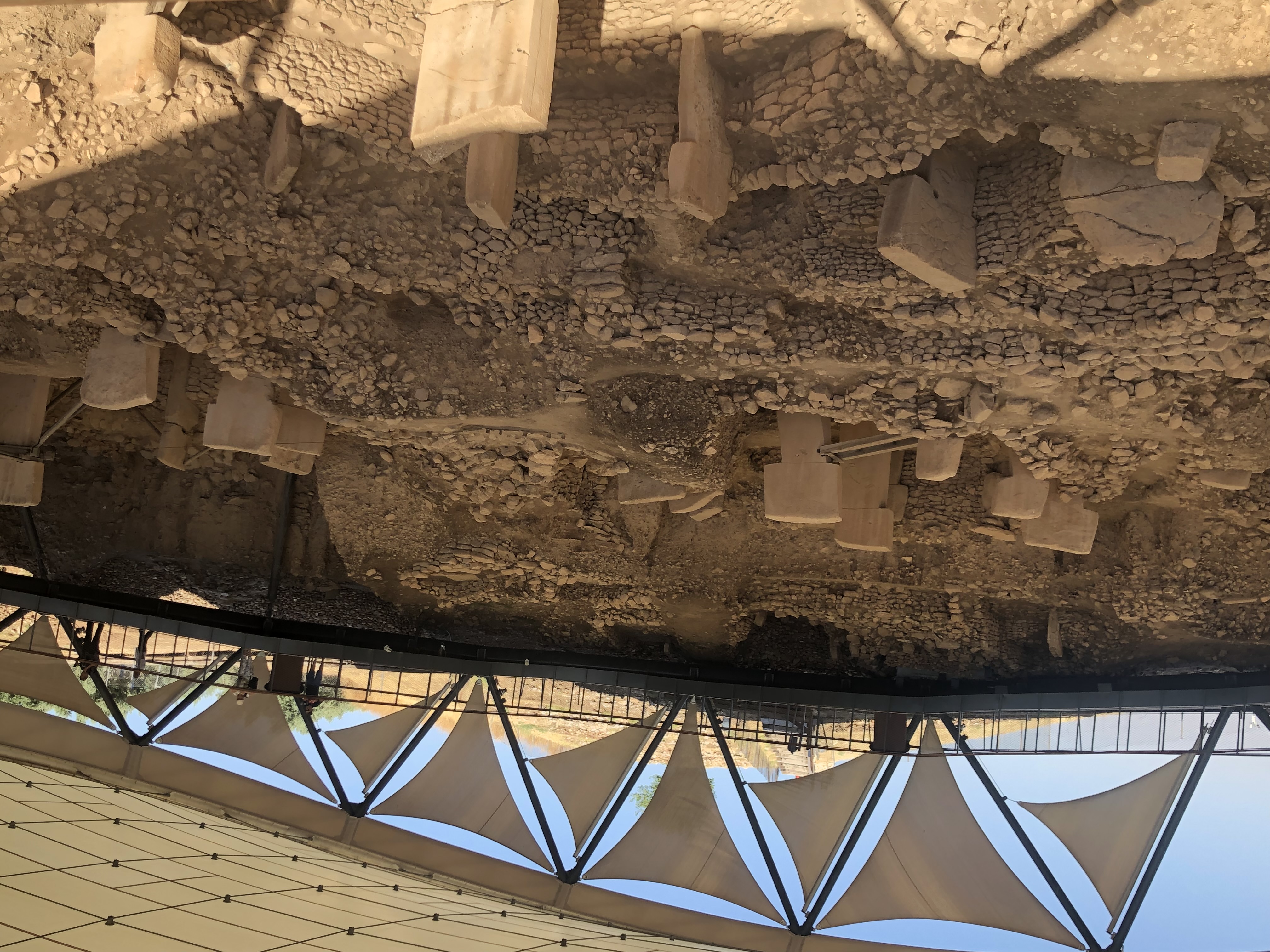
Göbekli Tepe, southeastern Turkey — constructed c. 9,600 BCE, before pottery, agriculture, or any settlement archaeology would recognize as a city.
Göbekli Tepe was built around 9,600 BCE — before agriculture, before pottery, before cities. Its T-shaped limestone pillars weigh up to 20 tons and are carved with lions, foxes, boars, and scorpions. It was not a settlement but a ritual center, built by mobile hunter-gatherers with no obvious organizational precedent. In later Egyptian theology, this period became Zep Tepi — the "First Time," when gods walked the earth and civilization was seeded. The Great Sphinx may be a timestamp from this same era: John Anthony West and geologist Robert Schoch have argued its water erosion patterns suggest construction during a much wetter period, possibly during Leo, when the lion would have risen at the spring equinox.
Taurus: The Monument Builders
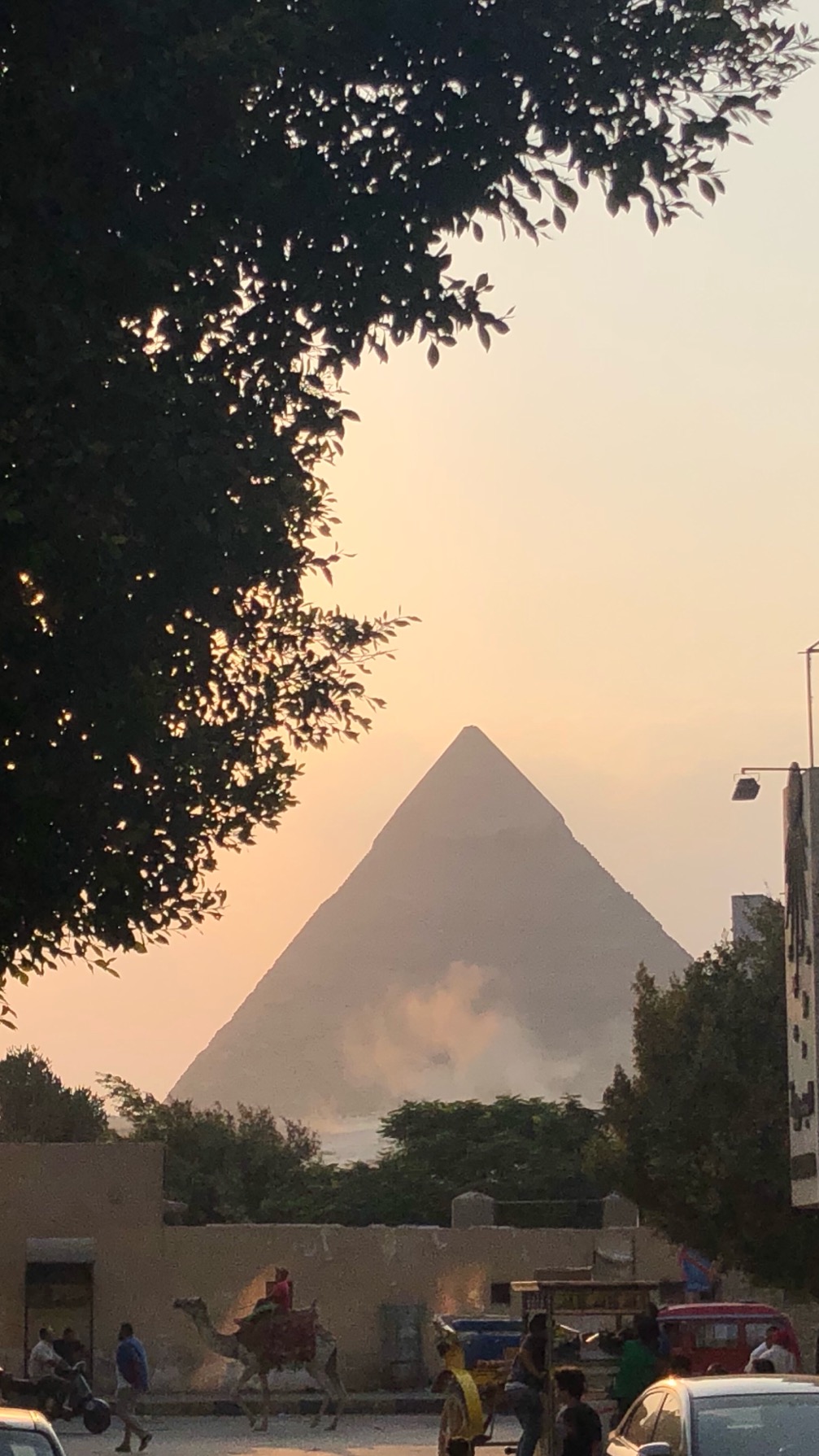
The Great Pyramid of Giza — built during the Age of Taurus, when bull symbolism permeated the entire ancient world.
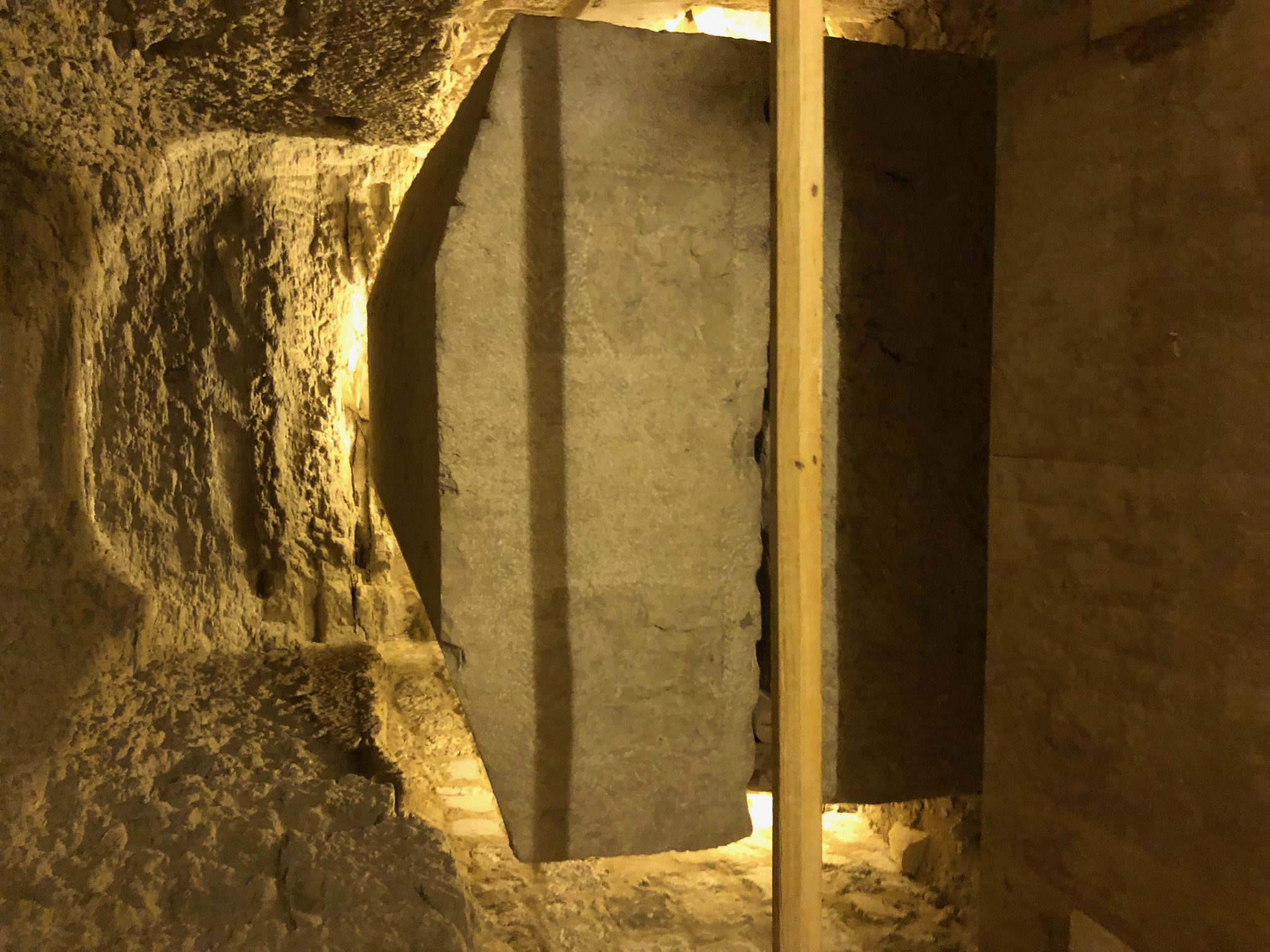
Inside the Serapeum of Saqqara. Each granite sarcophagus weighs ~70 tons, cut to precision tolerances that challenge conventional explanation.
The Age of Taurus produced the most ambitious building program in human history: the Great Pyramids, the Step Pyramid at Saqqara, the Ziggurat of Ur, Stonehenge in its final form, the megalithic temples of Malta. The bull dominates the symbolic record everywhere — Egypt's sacred Apis Bull, buried in the Serapeum with full royal honors; Hathor the cow goddess; the bull-leaping frescoes of Minoan Crete. Taurus is fixed earth: material consolidation, abundance made permanent, beauty as a spiritual act. Whatever was built in this age was built to last.
Aries: The Age of the Hero and the Conqueror
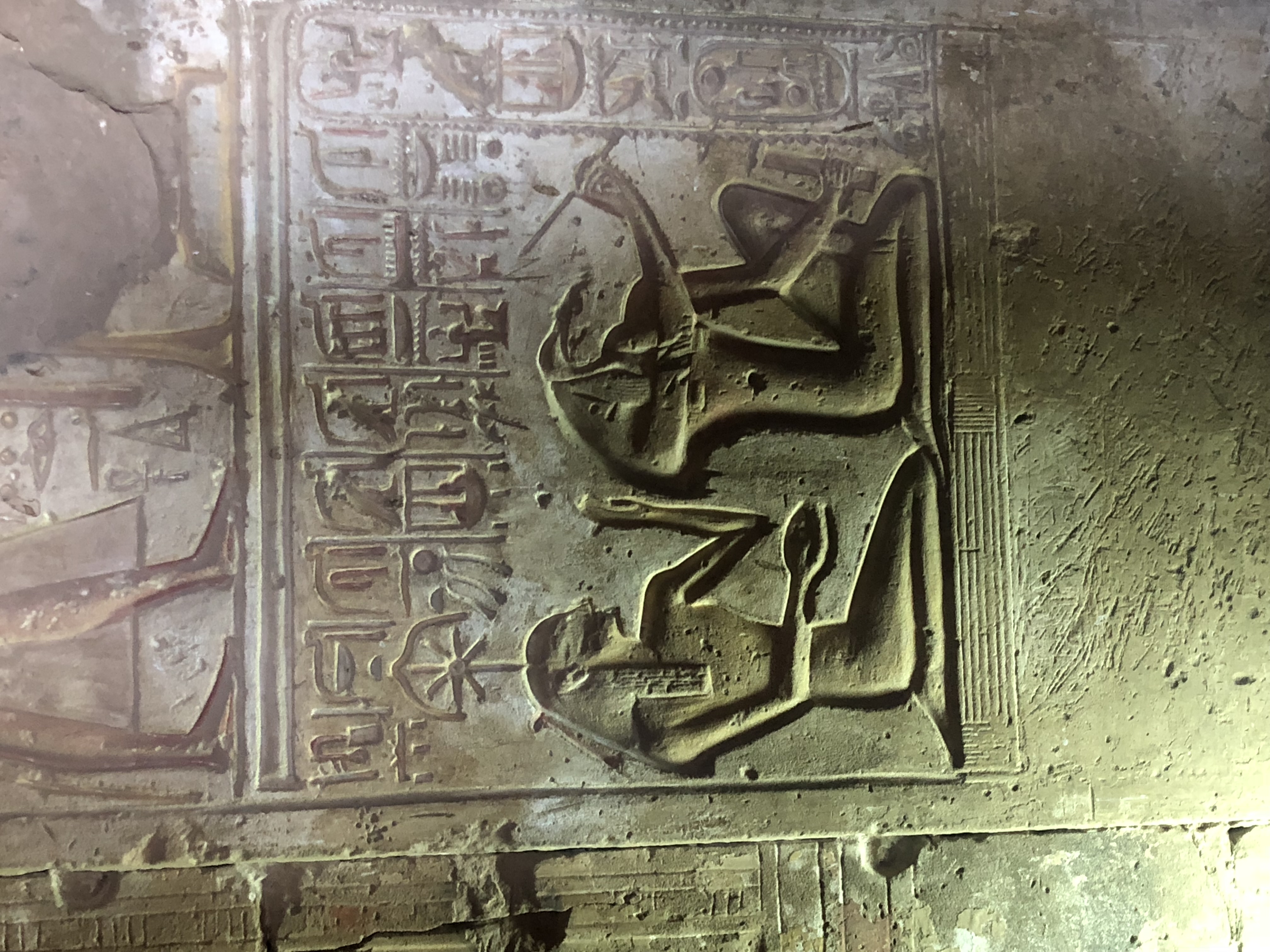
Seshat, goddess of writing and cosmic record, with Thoth at the Temple of Seti I, Abydos — the two deities who measured and inscribed the heavens.
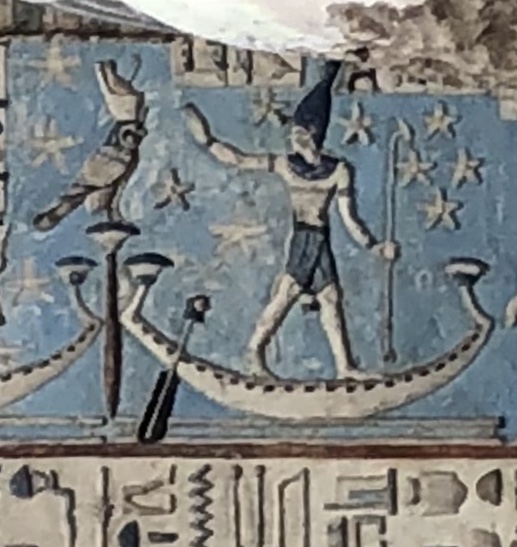
Osiris and Horus at Dendera Temple — Horus embarks on the Hero's Journey across the zodiac, navigating the solar barque through the star-filled sky.
In Egypt, the ram-headed Amun absorbs the solar deity Ra to become Amun-Ra — the hidden god who is also the sun — and ascends to supremacy during the New Kingdom, Egypt's most militarily expansionist era. The avenue of ram-headed sphinxes at Karnak announces the shift in the very landscape of religion. In Hebrew tradition, the ram appearing at the moment Abraham's sacrifice is redirected is read by comparative religion scholars as a mythological record of the same precessional transition. The Golden Fleece — the supreme object of Greek civilization's greatest heroic quest — is a ram's fleece.
But the dominant myth of Aries is not the ram. It is the hero. Alexander the Great sweeps across the known world in thirteen years, dying at thirty-two. The Persian Empire, the Assyrian Empire, the rising Roman Republic — this age is defined by organized force at continental scale, the warrior-king as civilization's highest archetype. Aries is cardinal fire: it initiates, it strikes, it does not negotiate. For two thousand years, humanity perfected the art of conquest.
Pisces: The God Who Suffers — and the Church That Silenced the Mystery
The fish appears almost immediately in early Christian iconography — scratched into catacomb walls, used as a covert symbol by communities meeting in secret under Roman persecution. The ichthys, the Greek word for fish, became an acronym: Iesous Christos Theou Yios Soter — Jesus Christ, Son of God, Savior. The figure of Jesus maps onto Pisces with uncanny precision: the fishermen called from their nets, the feeding of thousands with loaves and fishes, baptismal water, the self-sacrifice of a divine being as the path to collective redemption.
What is less often examined is what happened next. The Jesus of the Gospels — the wandering teacher who spoke in parables, healed the sick, challenged the temple authorities, and pointed always toward the kingdom within — was a very different figure from the Christ who would become the official deity of the Roman Empire under Constantine in 313 CE. The Edict of Milan did not simply legalize Christianity; it began the process by which a mystery tradition of individual transformation was absorbed into the apparatus of imperial control. By 380 CE, under Theodosius I, Christianity was the sole official religion of Rome. Paganism was outlawed. Temples were destroyed. The ancient sacred sites of Egypt, Greece, and the Celtic world were systematically dismantled or converted.
The Druids — the astronomical priests of the Celtic world, keepers of an oral tradition that encoded precessional knowledge in poetry and myth — were hunted to extinction in Britain and Gaul. The sacred groves where they performed their rites were burned. Julius Caesar had described their cosmological sophistication with grudging admiration; within three centuries of the Roman conquest, the tradition was gone.
The suppression of the old religions was not merely theological. It was the deliberate erasure of an entire epistemology — a way of reading the cosmos that the Church found dangerous precisely because it located the divine within nature, and within the individual.
Nowhere is this more visible than in the fate of the Gnostics. The early Christian world was not the unified church that later centuries projected backward onto it — it was a rich, contentious ecosystem of teachers and schools, many of whom taught that the divine spark resided within the individual soul, that direct mystical experience was available to anyone, and that the God of the Old Testament was a lesser demiurgic force rather than the supreme absolute. The Nag Hammadi texts, discovered in Egypt in 1945, preserve these voices: a cosmology in which Sophia, the divine feminine, plays a central creative role, and in which salvation is not obedience to authority but gnosis — direct, lived knowledge of the divine.
The Church declared these teachings heresy and spent centuries suppressing them. The Cathars of southern France — a 12th and 13th century movement that rejected the corruption of material power, revered a feminine divine principle, and organized itself without hierarchy or clergy — were annihilated in the Albigensian Crusade, the first crusade launched by Rome against other Christians. When asked how to distinguish Cathars from orthodox Catholics in the city of Béziers before its massacre in 1209, the papal legate reportedly replied: "Kill them all. God will know his own."
This is the shadow of Pisces: the same sign that gives rise to mysticism, compassion, and the dissolution of the separate self also gives rise to the totalizing institution — the faith that cannot tolerate competing faiths, the hierarchy that mistakes obedience for holiness. Pisces rules both the saint and the inquisitor. And now, two thousand years later, those institutions are cracking.
The Threshold of Aquarius
Aquarius carries water but is not water — it is air, the domain of mind, networks, and the radical idea that knowledge belongs to everyone.
Every age transition involves a symbolic revolution — the old symbols lose their charge and new ones emerge to carry the meaning the culture needs next. The cross gave way, slowly, to the helix. The cathedral gave way to the laboratory. The priest gave way to the scientist. And now those new symbols are themselves beginning to feel insufficient — because the materialist framework that replaced religious authority cannot explain consciousness, cannot account for meaning, cannot hold the depth of what humans actually experience.
What we are watching, underneath the noise of politics and technology and ecological crisis, is a shift in the dominant paradigm of what consciousness is. The Piscean model placed consciousness outside the individual — in God, in the Church, in the State, in any authority larger than the self that could grant meaning from above. The emerging Aquarian model is recovering something the ancient world understood: that consciousness is not a product of matter but its ground. That awareness is not something the brain generates but something it participates in. That the cosmos is not a mechanism running on blind physical laws but a living, self-aware field — call it Akasha, call it the quantum vacuum, call it what the Vedic seers called Chit, pure awareness knowing itself.
The old symbols are not simply being replaced by new ones. They are being remembered. The triskelion. The ankh. The ouroboros. The sacred feminine. The zodiac as a map of consciousness rather than a parlor trick. These are not New Age inventions — they are very old transmissions, surfacing again because the culture has reached a threshold where it needs what they encode. Levels of consciousness that were suppressed for two millennia are becoming available again, not because we are more evolved than our ancestors, but because the precessional clock has turned and the conditions that made their suppression necessary are dissolving.
The historian in you should remain skeptical. Correlating symbolic systems to history requires interpretive flexibility, and the ages don't have clean edges. But here is what keeps drawing me back: the people who built Göbekli Tepe 11,600 years ago watched the same sky we watch. They were tracking something real. And civilizations across the ancient world, without documented contact, kept arriving at the same numbers, the same symbols, the same cosmological frameworks — because they were all reading the same clock.
The Great Year turns whether we are watching or not. There is something clarifying about placing our current turbulence inside a frame this large — not to make it smaller, but to understand that what feels like collapse has happened before, and that on the other side of every ending humanity has survived, something was beginning. The symbols that carried us through the last age are exhausted. The ones being recovered have been waiting.
They always were.
Sources & Further Reading
Giorgio de Santillana & Hertha von Dechend, Hamlet's Mill (1969) · Klaus Schmidt, Göbekli Tepe (2012) · Ian Hodder, The Leopard's Tale: Revealing the Mysteries of Çatalhöyük (2006) · John Anthony West, Serpent in the Sky (1979) · Graham Hancock, Fingerprints of the Gods (1995). Note: some works are speculative and contested within academic archaeology — included here as part of the conversation, not as consensus scholarship.
